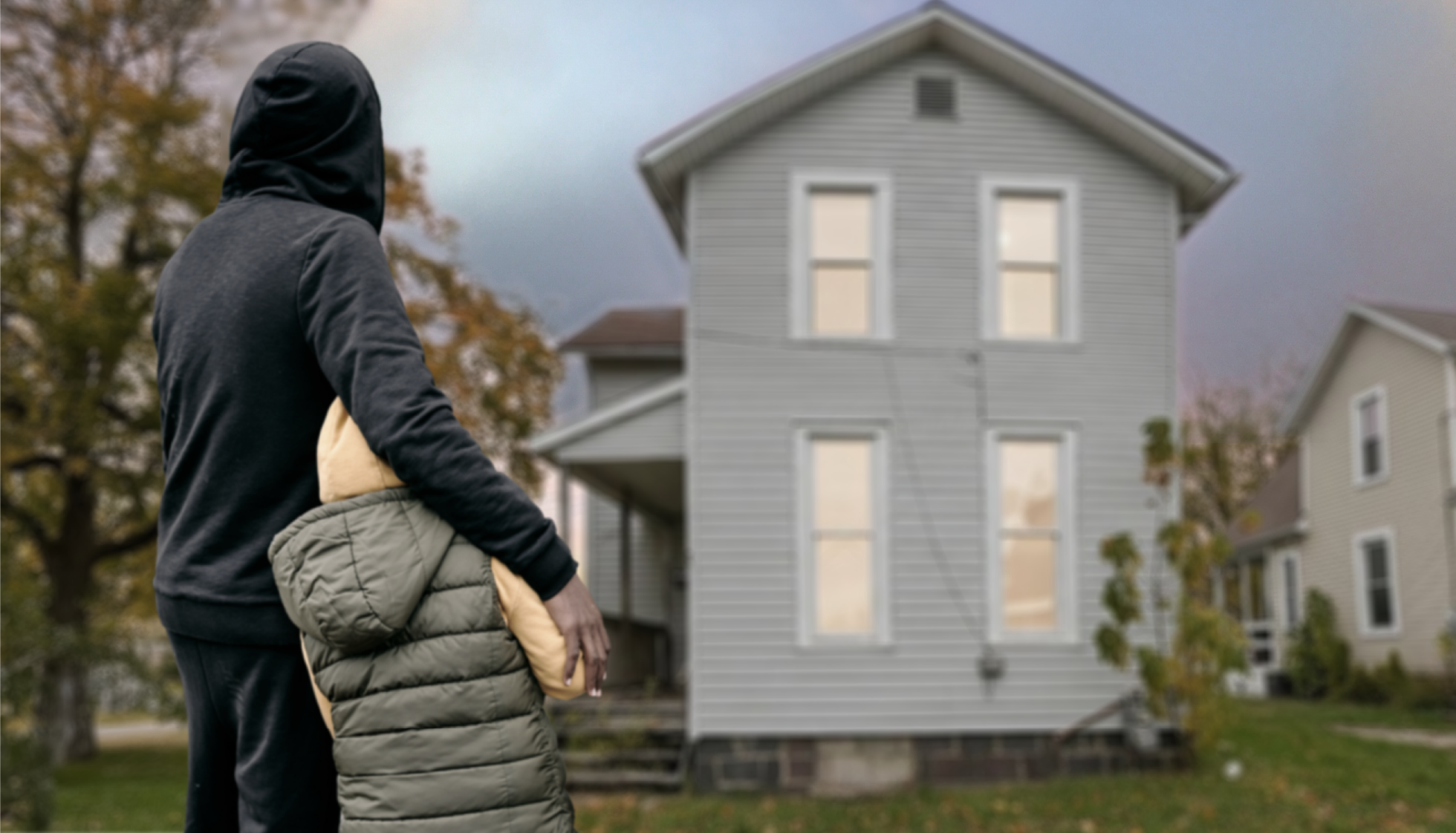
Did you know that on any given night, approximately 176 people are homeless in Licking County?*
Your Licking County friends, family, neighbors, classmates, coworkers, and others may be temporarily staying with friends or relatives. Others are living in shelters, and many are homeless — sleeping in cars, storage units, or places not intended for human habitation.
According to United Way of Licking County, roughly 91% of people experiencing homelessness in Licking County are doing so for the first time.
The Reporting Project
HUD Exchange
*This number reflects a one-night count and does not include the many households that are housing insecure but not yet homeless.
The Reporting Project – United Way
Home should be within reach for everyone. Why isn’t it?
Life Crisis
Sometimes homelessness doesn’t begin with long-term struggle. Homelessness here is often situational, not chronic. It’s the result of a crisis colliding with a lack of financial cushion and affordable housing.
It begins with one moment.
One flat tire.
One lost job.
One unexpected medical bill.
One death of a wage earner.
One divorce or separation.
One act of domestic violence.
One emergency.
One paycheck missed.
One relationship that ends.
One unsafe situation.
For many households in Licking County, it’s one unexpected event away.
Living on the Edge in Licking County

When Crisis Meets Financial Fragility
When households are financially stretched:
- A job loss can mean immediate eviction risk
- A separation can double housing costs overnight
- Domestic violence can force someone to leave for safety
- A car repair can mean choosing between transportation to work or school, or paying rent
Rising housing costs and inflation have intensified this pressure.
Breaking the Cycle
When families have access to short-term financial assistance, eviction prevention supports, safe shelter, and rapid rehousing support, a crisis does not have to become homelessness. With timely intervention and affordable housing options, many can regain stability quickly.
Life happens. Homelessness doesn’t have to.
*ALICE stands for Asset Limited, Income Constrained, Employed. These are working households earning above the federal poverty level — but still unable to afford the true cost of housing, childcare, healthcare, food, and transportation. This includes families below the federal poverty level — and many above it who still cannot make ends meet.
The Reporting Project
United Way of Licking County
Adequate and Available Housing
Even when someone is working and doing everything “right,” finding a safe, affordable place to live in Licking County has become increasingly difficult. Licking County is rapidly growing, and more people want to call this place home. However, the housing market is struggling to keep up with the demand. While the number of available homes across the county is limited, lower-income individuals are most burdened.

These numbers show that even though affordable housing exists for some, the “available” part of the equation is missing for others.
- Families compete for limited apartments.
- Seniors on fixed incomes struggle to find accessible units.
- People with disabilities face long waitlists.
- When there are more renters than homes, prices rise and those with the fewest resources are pushed out first.
That’s not a personal failure. That’s a housing shortage.
When vacancy rates are low and rent is high, landlords may require:
- Higher credit scores
- Large security deposits
- Income 2–3× the rent
- No eviction history
- No criminal background
These barriers make it especially hard for people already near the brink of homelessness.
When There Aren’t Enough Homes
- Households double up with family or friends
- People live week-to-week in motels
- Renters trade safety for affordability
- Families end up without a stable shelter
- Those who work in Licking County find housing in another county and have to commute
Wages
Right now, housing costs are outpacing wages across Licking County. People who work here, raise families here, and contribute to our community want to find a place to call home in Licking County, but can’t. It’s not for lack of trying. The cost of adequate, safe housing that is available for low to moderate-income households lags behind demand.
What does it take to afford a home in Licking County?
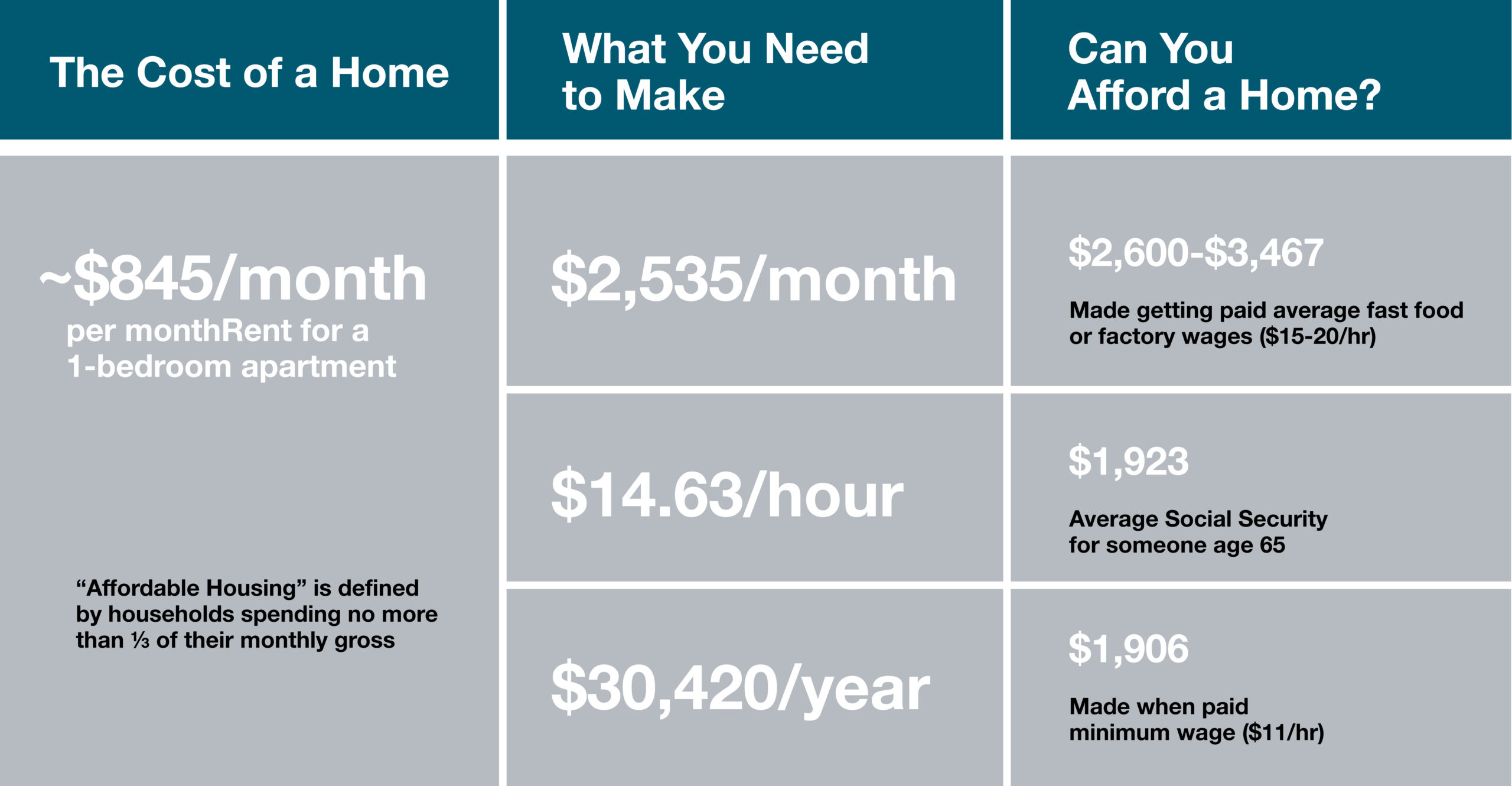
What it takes now to get a home in Licking County far exceeds what it took 5 years ago

HUD User
Zip Recruiter
Indeed
HUD User
Kiplinger
Department of Labor
HUD User
Medical Issues and Disability
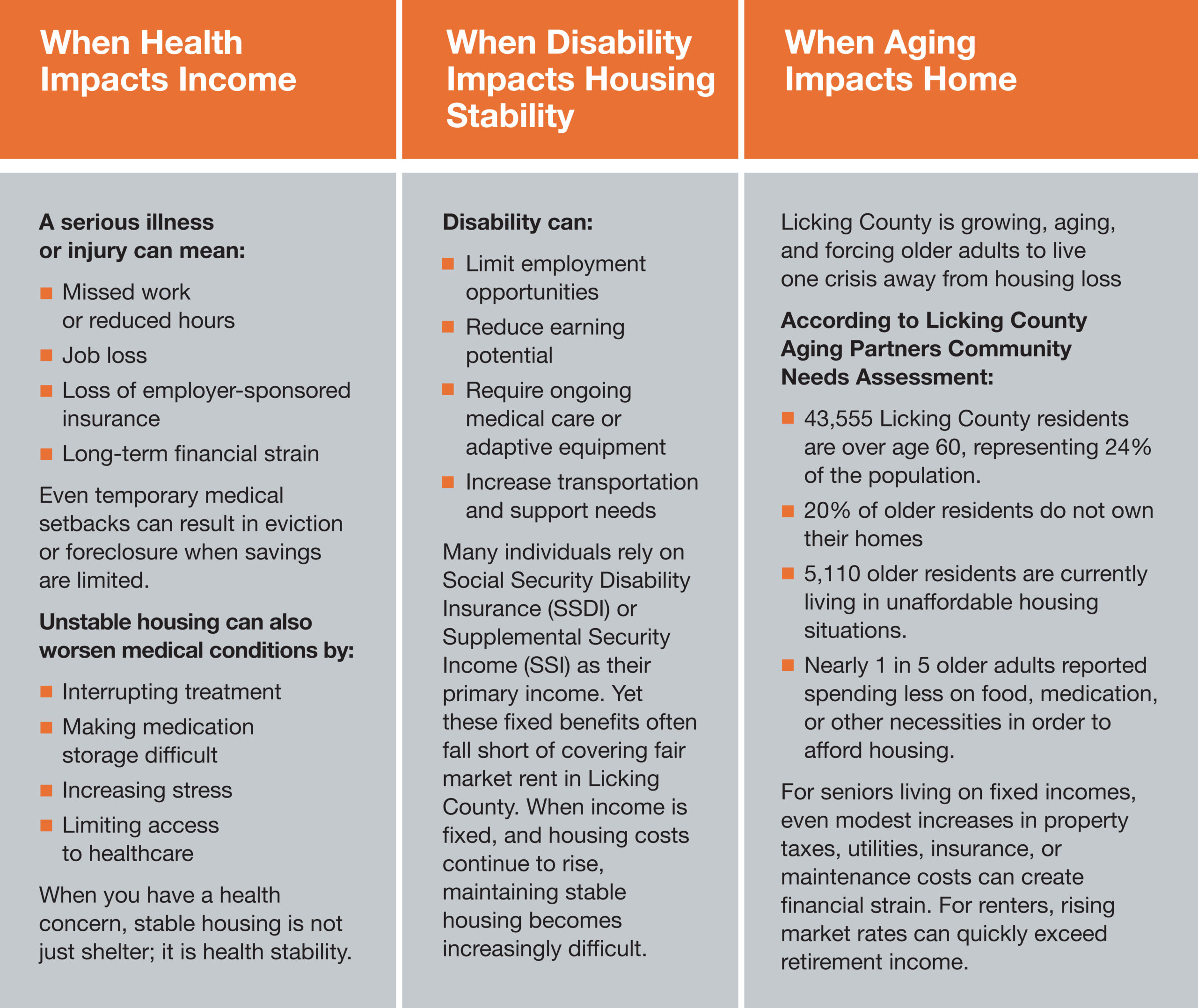
An unexpected diagnosis. A serious injury. A chronic condition. The realities of aging. Any one of these can reduce income overnight while rent, utilities, insurance, and property taxes continue to rise.
When paychecks stop, but bills don’t, housing stability becomes fragile. Housing instability often begins when health challenges and rising costs collide.
Aging Impacts Home
Breaking the Cycle
With access to:
- Affordable, accessible housing
- Home repair and aging-in-place supports
- Rental assistance
- Case management
- Healthcare coordination
Older adults and individuals living with medical conditions or disabilities can maintain stability and independence in their community.
Medical issues, disability, and aging are realities of life — not personal shortcomings. When housing systems do not account for them, people are pushed into crisis.
Addiction and Mental Health Conditions
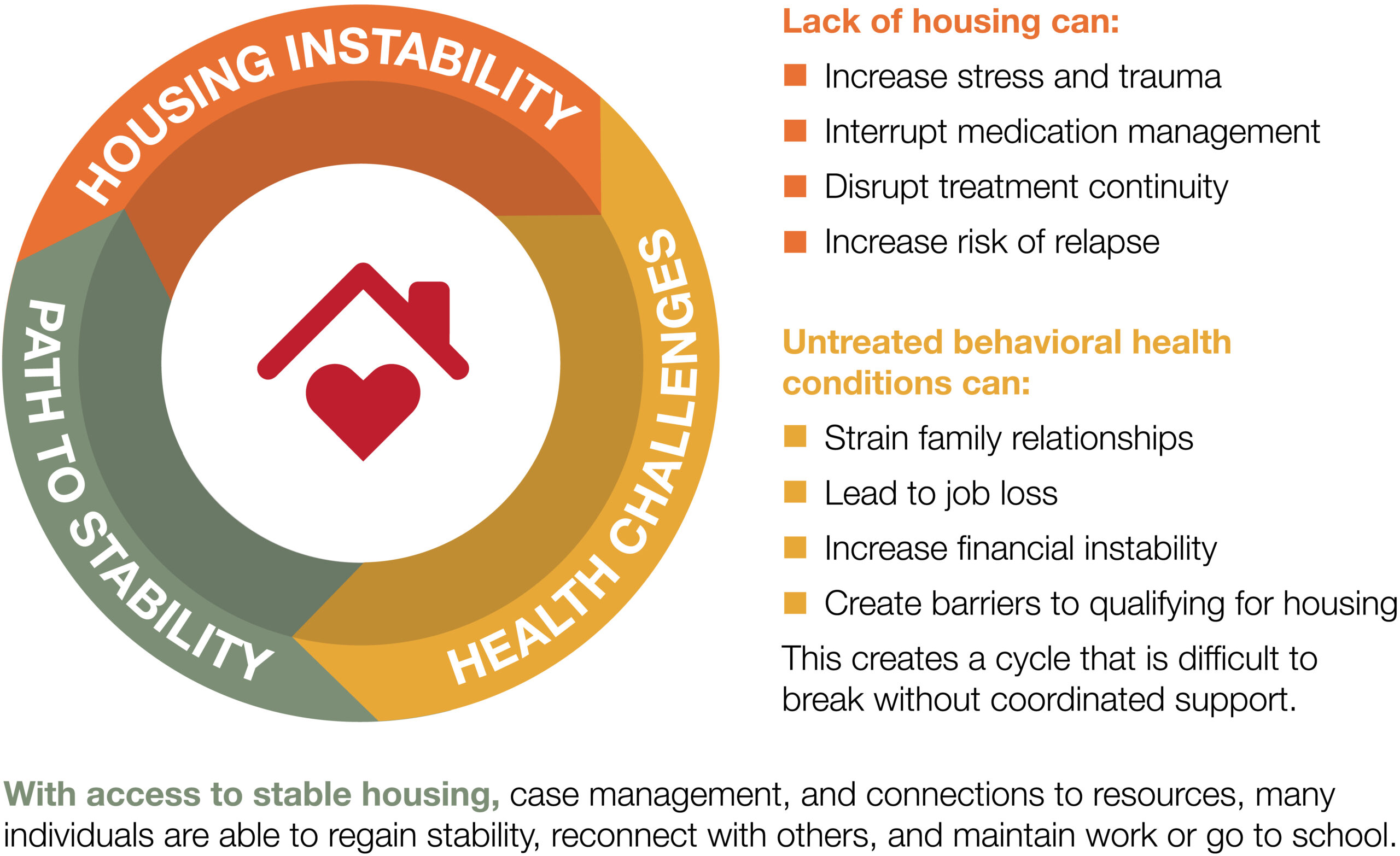
Mental health and addiction are health conditions, not personal failings. Housing stability is often the foundation that makes recovery possible.
In Licking County, many people experiencing homelessness are living with untreated or under-treated mental health conditions, substance use disorders, or both.
When housing is scarce and treatment is hard to access, mental health challenges can quickly become housing crises.
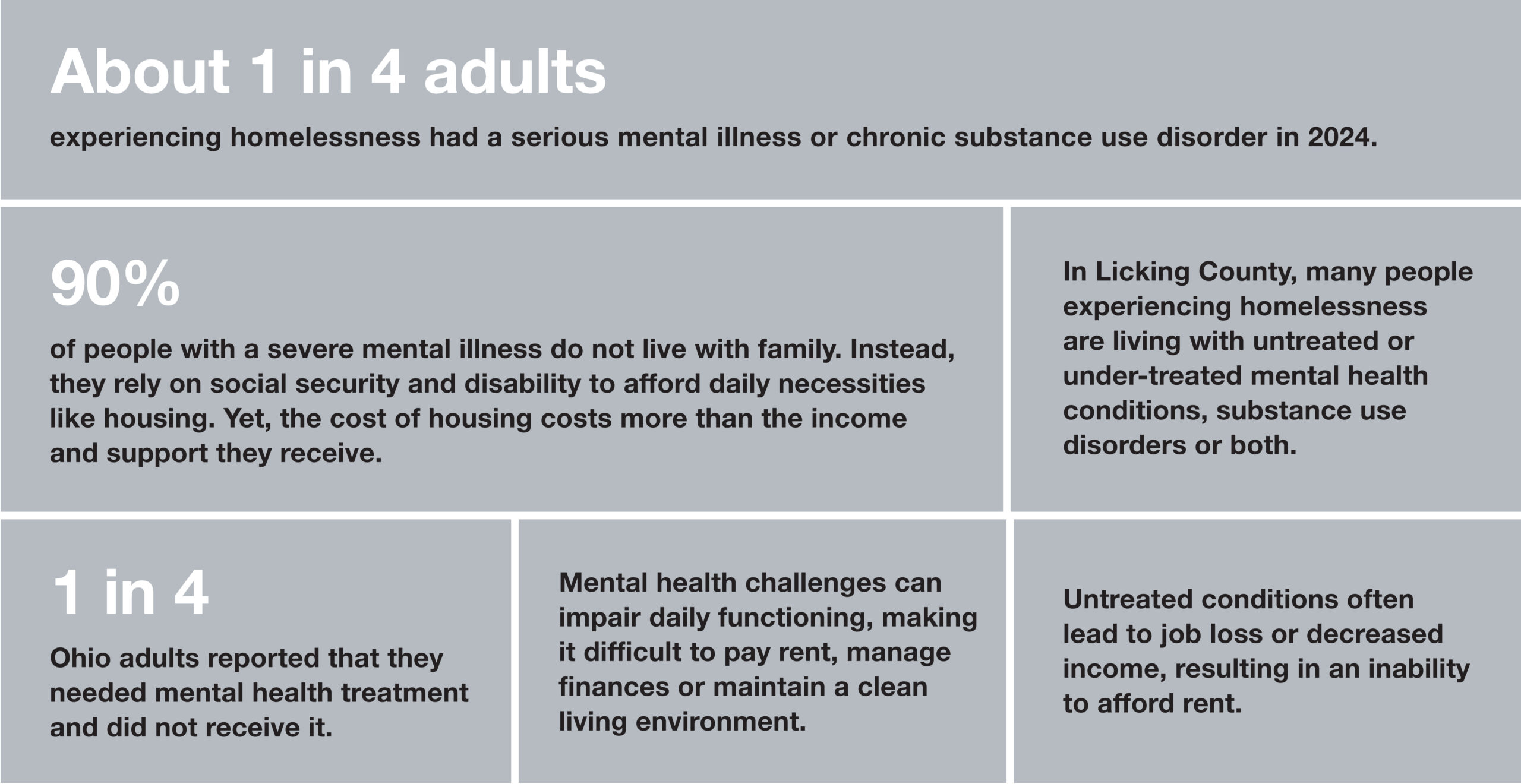
Mental health conditions and substance use disorders can contribute to housing instability and be worsened by it.

Breaking the Cycle Between Housing and Health
HUD Exchange
Health Affairs
Health Policy Ohio
Mayo Clinic
EndHomeless.org
UCLA
Nakphong, Bright, and Koreitem
Archarya, Bhatta, and Dhakal
Housing Matters
Fowler, Gladden, and Vagi
The issue is about more than numbers.
It’s about our neighbors.
Homelessness doesn’t always look like what people expect.
It looks like parents trying to keep kids in the same school.
It looks like someone working while sleeping on a friend’s couch.
It looks like families doing everything they can to stay connected to their community while searching for a safe, affordable place to live.
Hear from real people with real experiences navigating housing instability in Licking County.


Let’s make a difference for everyone who calls Licking County home.
The Licking County Housing Collaborative believes that when we invest in helping people navigate a crisis successfully, in affordable housing solutions, we strengthen families, protect dignity, and build a future where people can stay rooted in the place they already belong.

Learn About Licking County’s Movement and Commitment
The Licking County Foundation believes that the strongest solutions to the challenges our community faces come from the people who live, work, and play in it.
In a 2022 community survey conducted by the Licking County Foundation in which residents and business owners were asked to choose one thing they would do to improve lives in Licking County, respondents identified housing and homelessness as a top concern.
For nearly two years, the Foundation organized community conversations through its “At the Table” initiative, reviewed community data, and heard firsthand from those working directly on the issue of homelessness in Licking County. It was clear that many people were working on the issue, but collective action was needed to make a greater impact.

The Housing Collaborative
A unified group that includes the voices from community partners across the county and those who are closest to the issue with lived experience.

The Housing Initiatives Fund
Provides needed financial resources for this work. Click here to learn more about the fund or to donate.
Together, we aim to reduce barriers to housing, increase support for our friends and neighbors in crisis, and make sure everyone can call Licking County “Home.”
Learn
about the causes of homelessness and housing instability
Convene
conversations and resources to address the largest barriers
Take Action
to increase access to housing services and support the development of affordable housing
Encourage Others
to get involved in the cause through education, giving and volunteerism
Happening in 2026:
Resource Navigation and Support
The Foundation has committed to funding five new community navigators across Licking County. Navigators turn awareness into action, helping neighbors learn about resource and move from crisis to stability.
The Collaborative modeled the idea for navigators on recent strong results from navigation services piloted at the Licking County Health Department, the Collaborative committed to expanding the model countywide. Based on recommendations from frontline service providers, these navigators will be embedded within partner organizations throughout the county.


Navigators help individuals and families:

Licking County is Our Home…let’s help our neighbors.
Want to learn more?
Partner Agencies